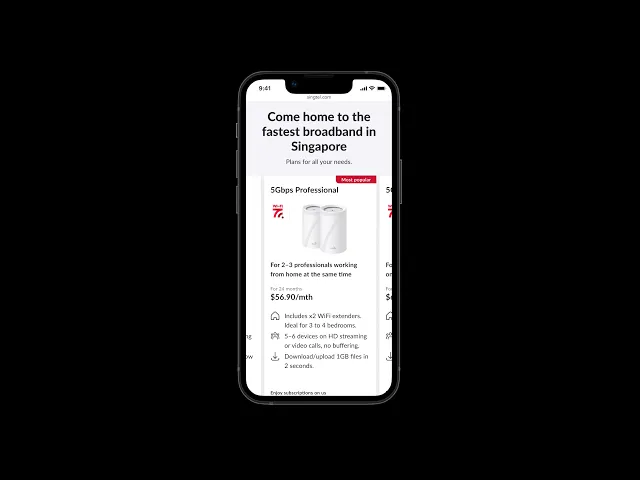
2024
From Browsing to Buying:
A Better Broadband Journey
Web buy flow
Project overview
Why we did this
Customers find it difficult to compare, select and purchase a suitable broadband plan online.
Hypothesis
Making plans directly comparable and having a guided (step-by-step) online purchase process will improve online conversion rates.
The work done
A new buy flow similar to industry e-commerce experiences like Apple and Amazon.
Tested with real customers under a usability study.
How this helps customers
Easier plan comparison and decision-making points
Assurance at every step of purchase
How this helps the business
Increased online conversion rates
Reduced customer drop-offs at checkout
Stronger trust and brand affinity
Before
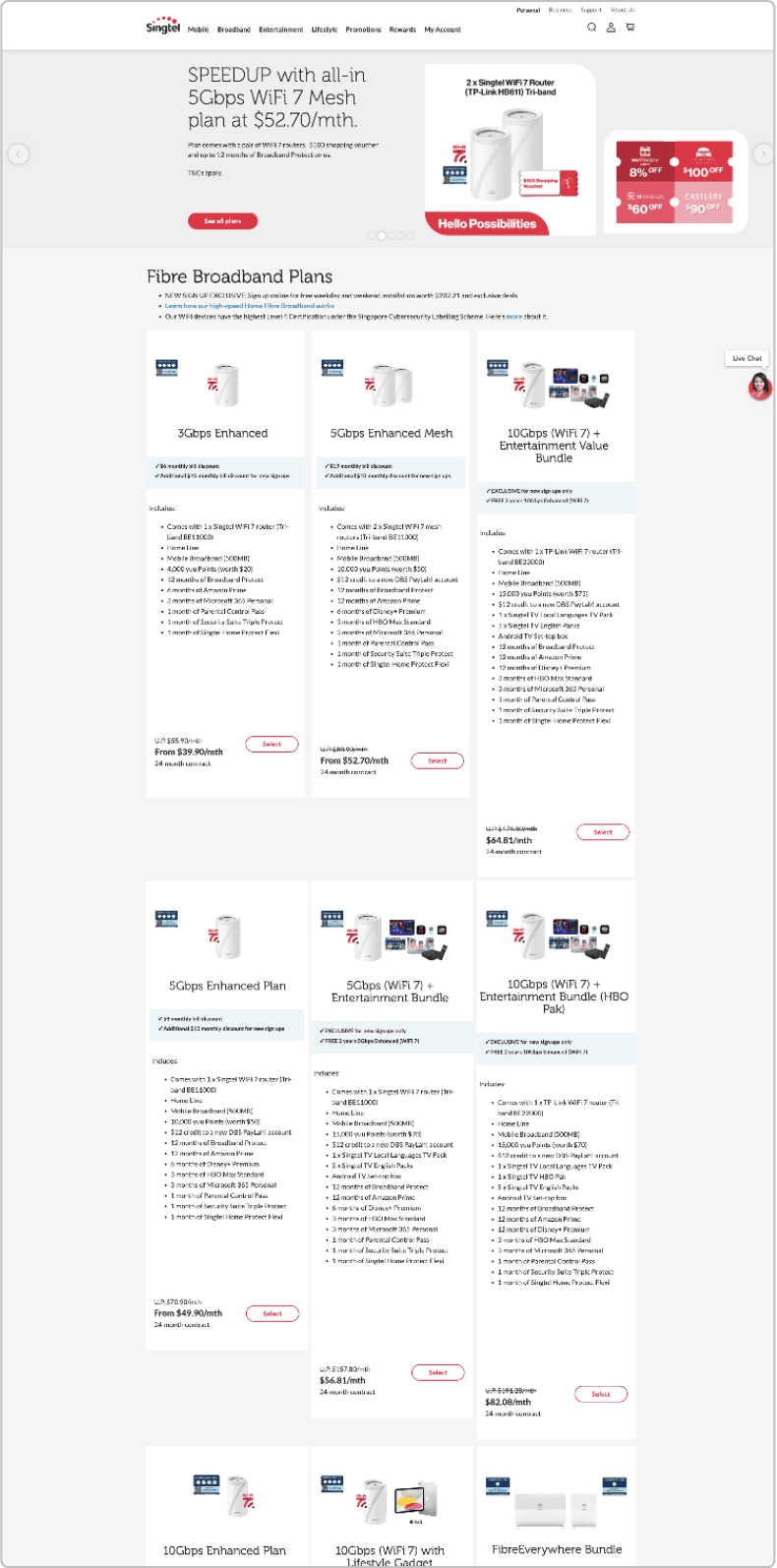
Customers are highly engaged at catalogue pages, but overall conversion rate remains low. The three key issues with the current buy flow are:
1
Customers find it difficult to compare and understand value derived from plan pricing, speed, and added services.
2
More than 10 webpages exists across the website – with overlapping, yet incomplete plan information.

3
Plan purchase requires a form submission, but form layout and requested information vary between plans.

After
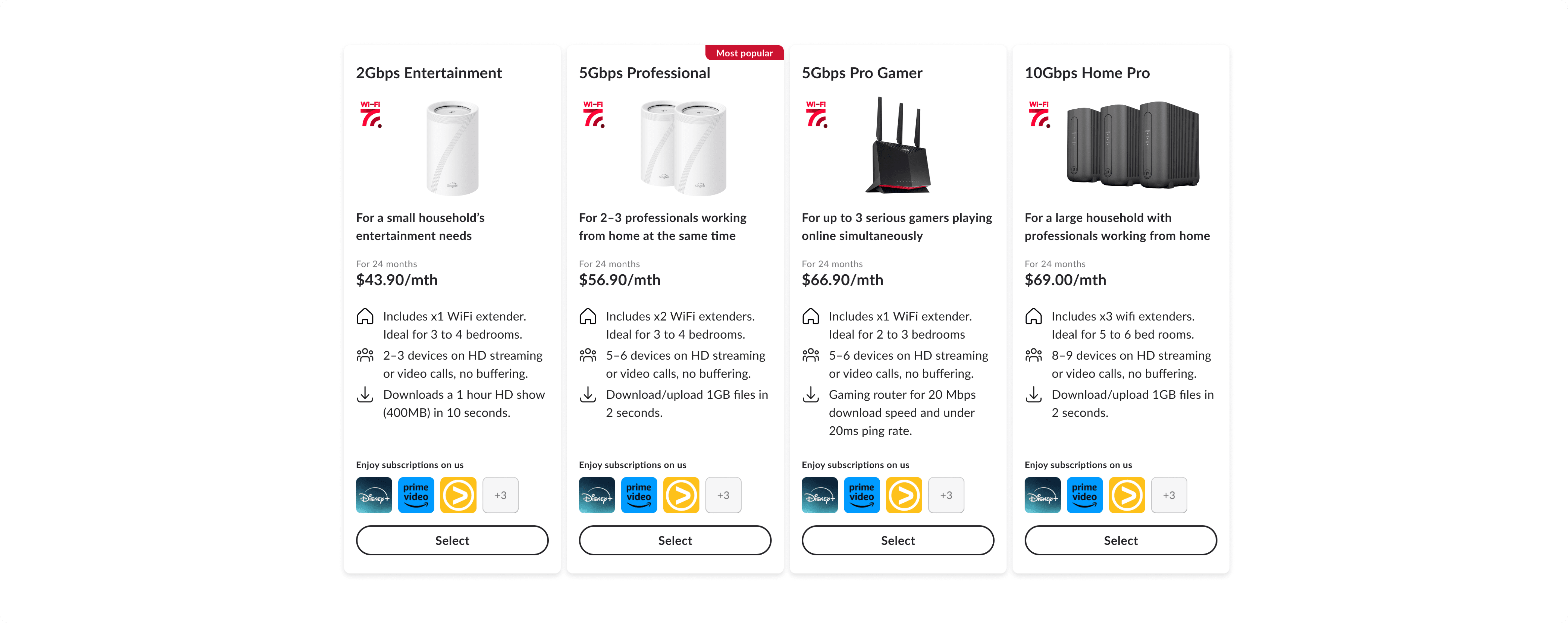
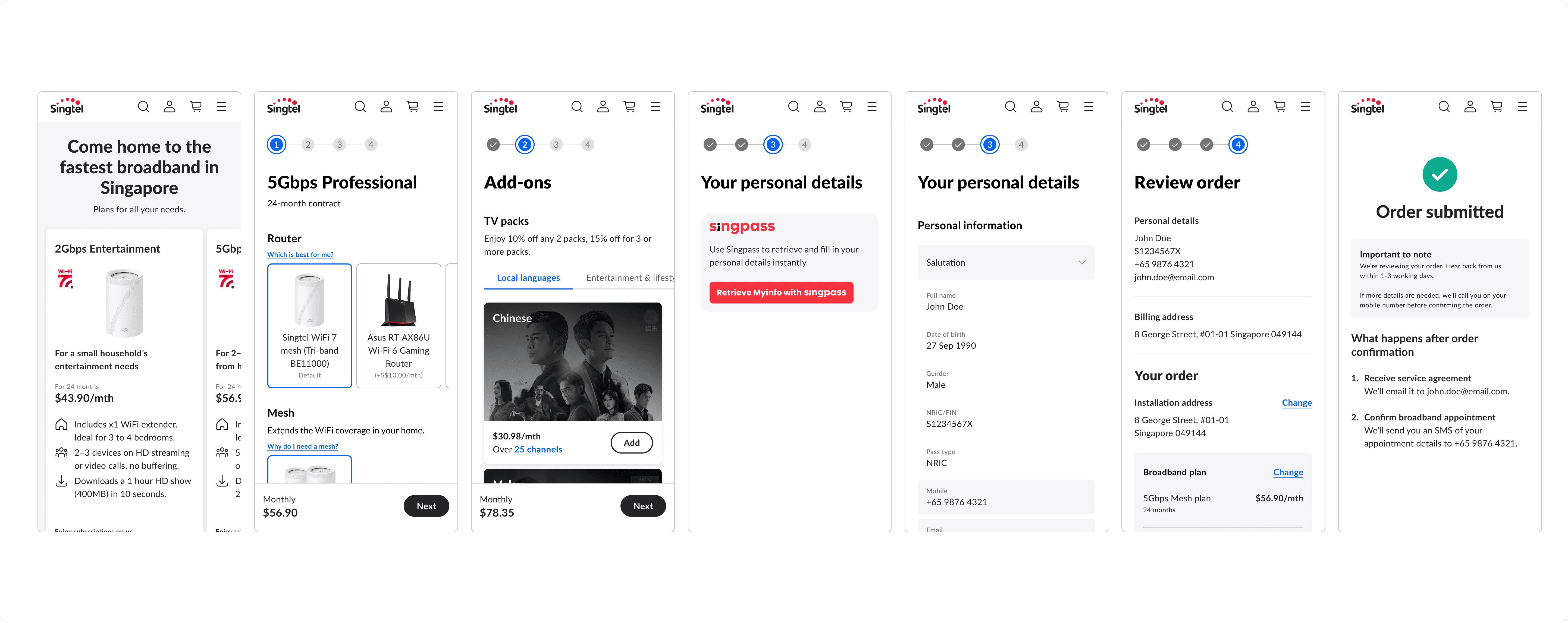
Customers get details at the right place and right time. The flow of content provides context, reliability, and value at every step of the journey.
1
Plans in the catalogue are structured for comparison based on context of use and price.
2
Purchase process is standardised for all plans. Customers can find more relevant information in each step.
3
Summarising a customer’s purchase and setting of expectations in the next steps.

The process
Myself and my co-project owner (UX researcher) led the process from initial assessment to the final outcome.
In the process, we worked with content designers, product marketing, the web product owner, design system owners, and developers.
Our process can be broken into these steps:
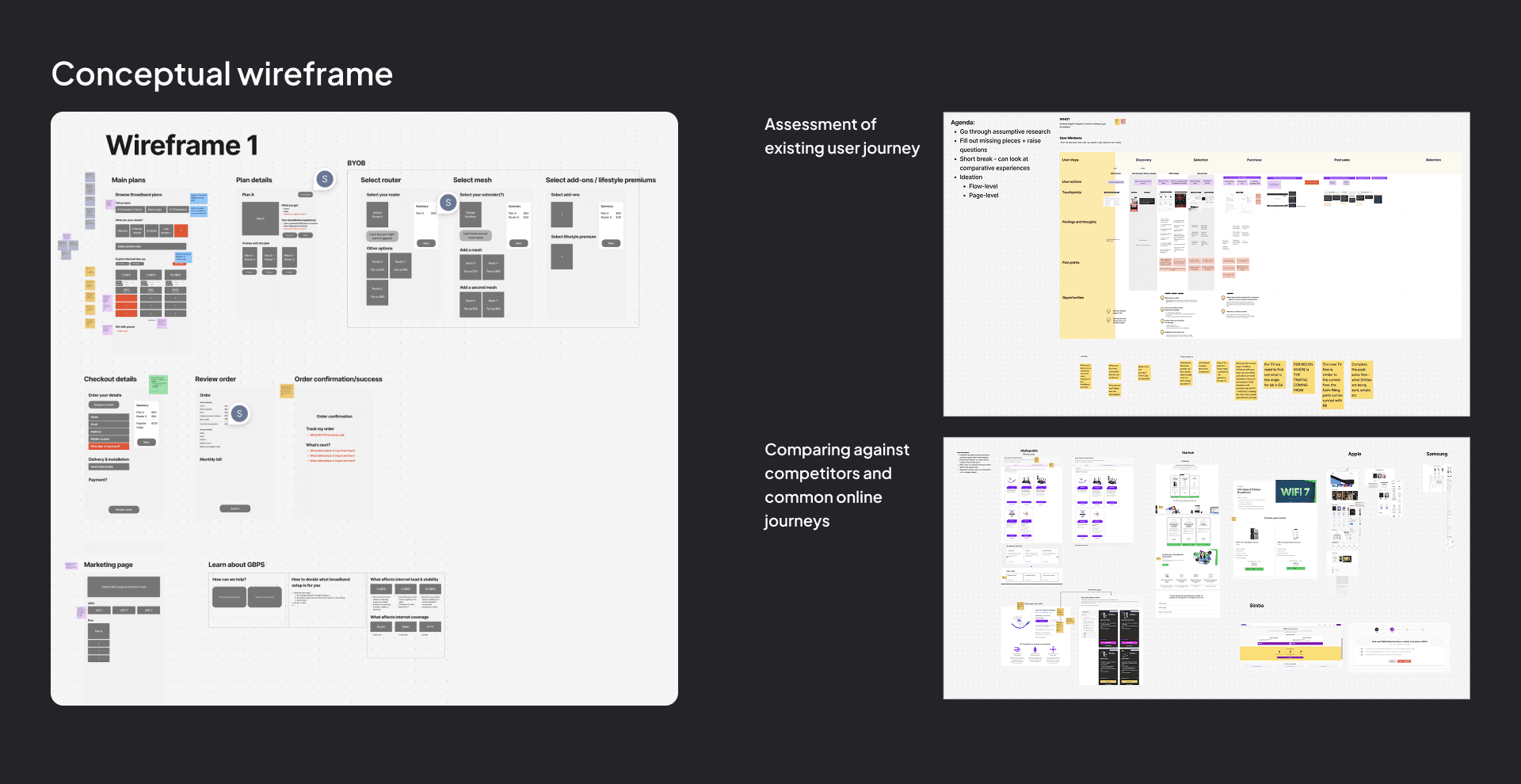
Assessment of existing flow & screens
Concept refinement
Concept & usability test
Design completion


My learnings
Prioritise your recommendations to stakeholders
One key finding was around how broadband plans were described. Traditionally, plans focused on what they included, but our testing showed that a different content angle resonated better with customers.
However, implementation depended on the product marketing team. Because the change was significant, full buy-in was challenging. If I were to do it again, I’d prioritise smaller, incremental changes to build confidence with them over time.
Keep asking questions, especially at the start
New discoveries and use cases kept surfacing even after design reviews by involved stakeholders. At times, I relied on the business product owner to confirm that all parts of the product construct were covered.
In hindsight, we would have benefited from mapping the full business construct to the design early on, and exhaustively testing it at the wireframe stage with thorough walkthroughs.